

Introduction: More Than Just Cards on the Table
Poker, long hailed as the quintessential card game of skill and psychology, is far more than a pastime—it is a cerebral battleground. With its roots tracing back to 19th-century America, poker has evolved from smoky saloon corners to glittering casino tables and global online platforms. What sets poker apart from mere games of chance is its rich tapestry of strategy, intuition, and psychological warfare. To play poker is to enter a realm where patience meets aggression, mathematics meets gut instinct, and every card dealt could shape a fortune or forge a legend.
As both a social ritual and a competitive pursuit, poker remains unrivaled in its complexity and cultural impact. Whether you’re a novice learning to read the table or a seasoned player refining your strategy, the game offers endless layers of challenge and intrigue.
A Brief History: From Riverboats to World Stages
The origins of poker are debated, but most historians agree that it descended from a combination of European card games, including the French “poque” and the German “pochen.” It found fertile ground in the United States, where Mississippi riverboats served as floating casinos for traders and adventurers. The Civil War era saw the introduction of many variations, including draw and stud poker.
By the 20th century, poker had become a staple of American gambling culture, with major milestones such as the establishment of the World Series of Poker (WSOP) in 1970 catapulting the game to international fame. The early 2000s saw a dramatic surge in popularity thanks to televised poker tournaments and the rise of online platforms, ushering in a new generation of players and elevating the game to a global phenomenon.
The Structure of the Game: Variants and Vocabulary
Poker is not a singular game but a family of card games that share certain core rules while varying widely in format. The most widely played variant today is Texas Hold’em, followed by Omaha, Seven Card Stud, and Five Card Draw.
Core elements found across most poker games include:
-
Blinds or Antes: Forced bets that ensure action in every hand
-
Hole Cards and Community Cards: Private and shared cards used to form the best five-card hand
-
Betting Rounds: Structured phases of wagering that test courage, perception, and control
-
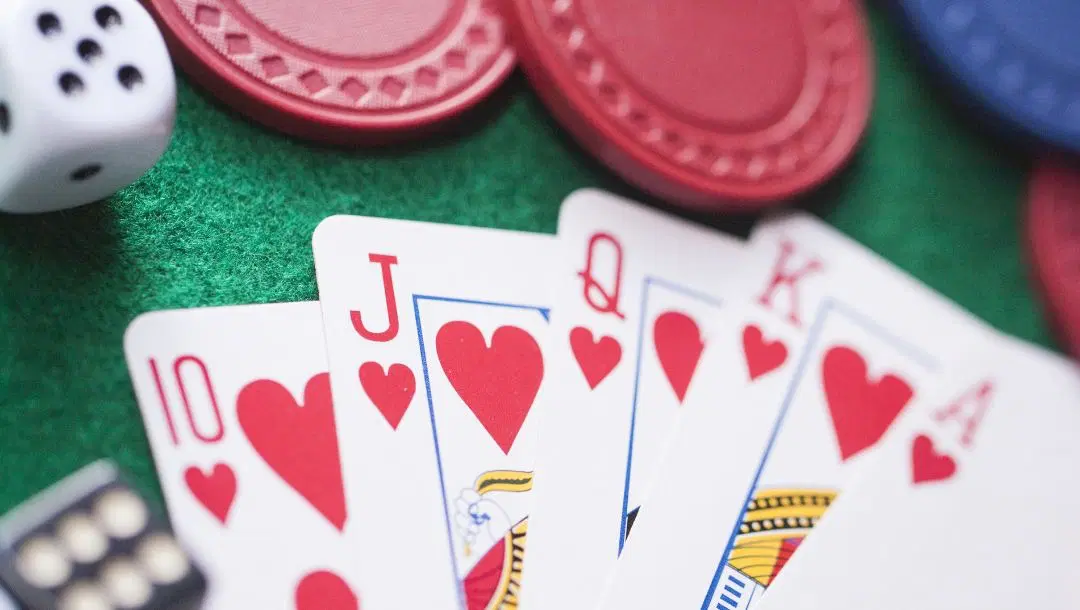
Hand Rankings: A hierarchy from high card to royal flush that determines the winner
What distinguishes poker from purely chance-based games is its emphasis on betting. The real game occurs not just in the hands dealt, but in the decisions players make based on partial information, player behavior, and game context.
The Psychological Battlefield: Reading and Misleading
In poker, your cards matter—but your ability to read others may matter even more. This is where the game transcends mathematics and enters the realm of psychology. Every player is both an actor and an analyst, trying to conceal their own intentions while decoding those of their opponents.
Essential psychological skills in poker include:
-
Reading Tells: Subtle physical cues or betting patterns that reveal a player’s confidence or hesitation
-
Bluffing: Representing a stronger hand than you hold to force folds from better hands
-
Tilt Management: The ability to remain emotionally composed after a loss, preventing irrational decisions
-
Table Image Manipulation: Curating how others perceive you—tight, loose, aggressive—and using that image strategically
Poker is a game of incomplete information. Success lies not just in playing your cards, but in playing the player.
Strategy and Skill: The Mathematics Behind Mastery
While poker rewards intuition and daring, it is fundamentally a game rooted in probability and game theory. Every decision, from whether to call a bet to when to fold, can be examined through mathematical lenses such as pot odds, expected value, and implied odds.
Key strategic principles include:
-
Position Play: Acting later in a betting round gives valuable information and a tactical edge
-
Hand Selection: Not all hands are worth playing; discipline in starting hand selection is a hallmark of strong players
-
Stack Management: Understanding how chip count affects strategy, especially in tournament play
-
Adaptability: Recognizing when to shift gears, tighten up, or loosen your play based on table dynamics
While luck can determine individual outcomes, skill asserts itself consistently over the long run. This balance between chance and control is part of what makes poker endlessly compelling.
The Online Revolution: Poker in the Digital Age
The internet has revolutionized how poker is played, practiced, and perceived. Online poker platforms have made the game more accessible than ever, allowing players to compete with others across the world at any hour. With the ability to play multiple tables simultaneously, track statistical performance, and participate in micro-stakes games, players can now hone their skills at an unprecedented rate.
Advantages of online poker include:
-
Rapid game volume for faster learning
-
Detailed hand histories and analytics tools
-
A broader spectrum of players and skill levels
-
24/7 availability and tournament variety
However, online poker lacks the physical cues and interpersonal dynamics of live games, requiring players to rely more heavily on betting patterns, timing, and digital behavior.
Ethics and Responsibility: The Other Side of the Table
Poker is undeniably thrilling, but like all forms of gambling, it carries inherent risks. The game demands not just financial literacy but emotional intelligence. Without proper boundaries, poker can foster addictive patterns, particularly for those chasing losses or mistaking variance for failure.
Guidelines for responsible poker play:
-
Set clear time and money limits before starting
-
Separate your poker bankroll from personal finances
-
Maintain a healthy balance between poker and other life commitments
-
View the game as a long-term pursuit, not a quick fix for financial gain
-
Be mindful of your emotional state; never play under stress or fatigue
Awareness, reflection, and discipline are the foundations of sustainable poker enjoyment.
Conclusion: A Timeless Game of Infinite Depth
Poker is more than a game—it is a mirror of human behavior, a test of nerve and nuance, and an endless pursuit of strategic refinement. It offers equal parts thrill and thought, chance and control, art and science. Whether seated at a private home game, facing off in a high-stakes tournament, or navigating the digital tables of the online world, every hand dealt is a new story, every bluff a performance, and every decision a step toward mastery.
In the ever-shifting landscape of modern gaming, poker stands as a monument to skillful risk and psychological finesse. For those willing to learn, adapt, and endure, it offers not just entertainment, but a lifelong intellectual journey—one card at a time.