

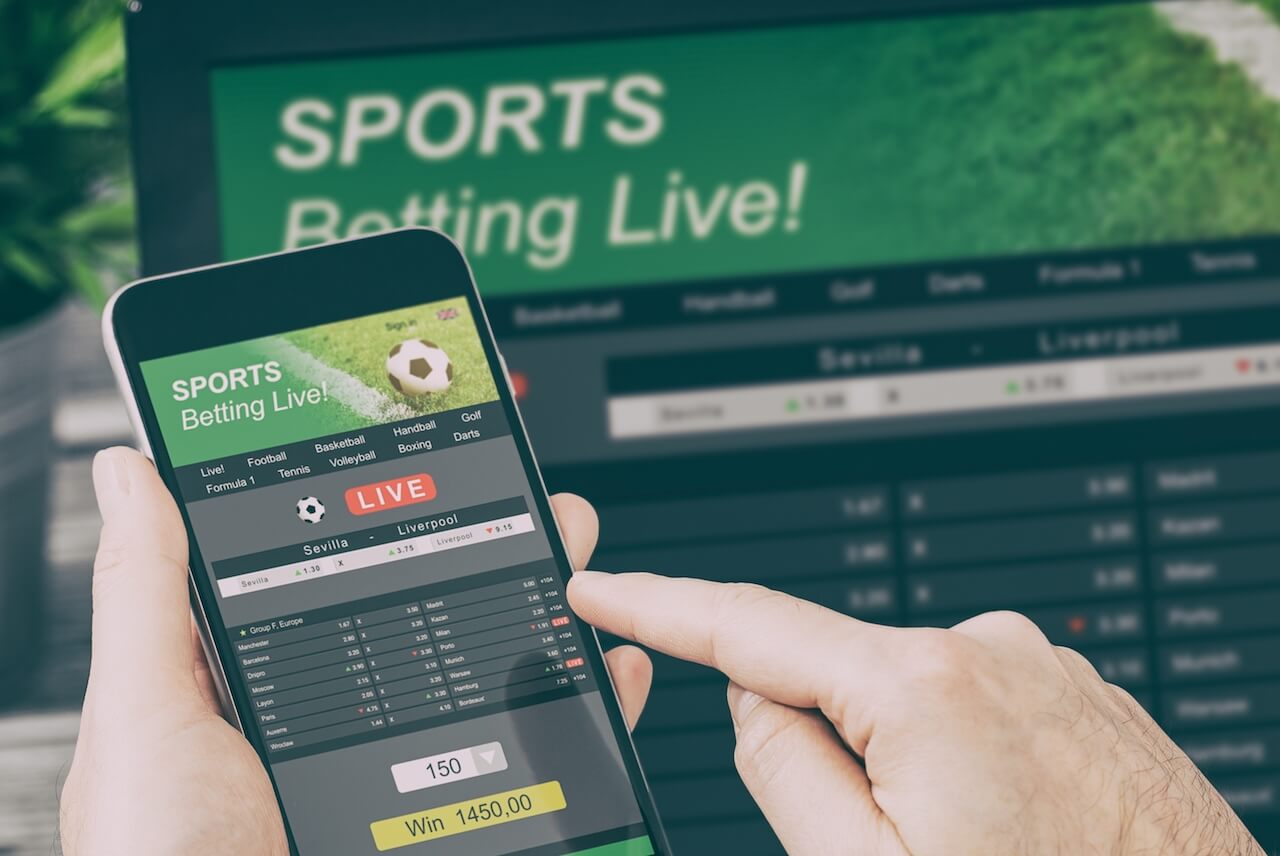
Professional sports betting bears little resemblance to casual wagering. While casual bettors rely on gut feelings, favorite teams, and luck, professional bettors operate much like financial market analysts. They treat sports betting as an investment portfolio, focusing on data, probability, and market inefficiencies. At the core of this disciplined approach is the ability to analyze odds like an expert. Mastering odds analysis allows you to find value, understand implied probability, and consistently beat the closing line.
Understanding the Fundamentals of Betting Odds
Before you can analyze odds professionally, you must understand how they represent probability. Bookmakers do not set odds based on who they think will win a game. Instead, they set odds to balance action on both sides of a wager and to bake in their profit margin, known as the juice or vig.
Different regions utilize distinct formats for displaying odds, but they all convey the exact same mathematical information:
-
Decimal Odds: Common in Europe and Canada, decimal odds represent the total payout rather than just the profit. A stake of 100 dollars at odds of 2.50 returns 250 dollars total, which includes your initial 100 dollar stake and 150 dollars in profit.
-
Fractional Odds: Popular in the United Kingdom, fractional odds display profit relative to the stake. Odds of 4/1 mean you win 4 dollars for every 1 dollars you wager.
-
American Odds: Standard in the United States, American odds use positive and negative numbers. Negative numbers indicate the favorite and show how much money you must risk to win 100 dollars in profit. Positive numbers indicate the underdog and show how much profit you win on a 100 dollar stake.
Converting Odds to Implied Probability
The single most important skill for a professional bettor is converting odds into implied probability. Implied probability is the percentage chance that a bookmaker assigns to a specific outcome based on their posted odds.
To calculate implied probability across different formats, use these standard formulas:
-
Decimal Formula: Probability = 1 / Decimal Odds
-
Fractional Formula: Probability = Denominator / (Numerator + Denominator)
-
American Negative Formula: Probability = Negative Odds / (Negative Odds + 100)
-
American Positive Formula: Probability = 100 / (Positive Odds + 100)
For example, if a team has American odds of -200, the implied probability is 200 divided by 300, which equals 66.7 percent. If another team has odds of +200, the implied probability is 100 divided by 300, which equals 33.3 percent.
Identifying the Overround and True Probability
If you add together the implied probabilities of every possible outcome in a single market, you will always get a number greater than 100 percent. In a standard two-way market with -110 odds on both sides, the implied probability for each side is 52.38 percent. Combined, they equal 104.76 percent.
That extra 4.76 percent is the bookmaker margin, commonly referred to as the overround or vig. Professional bettors do not just look at the raw odds; they strip away the overround to calculate the true probability of an event occurring.
To find the true probability, divide the individual implied probability by the total market implied probability sum. Removing this tax helps professionals determine whether a price offers genuine value or if it is a bad investment.
Finding Value in the Betting Markets
Value is the cornerstone of professional sports betting. Finding value means identifying situations where your calculated probability of an outcome is higher than the implied probability suggested by the bookmaker odds.
If you analyze an upcoming football match and calculate that a team has a 55 percent chance of winning, but the available odds imply a 50 percent probability, you have found a value bet. You do not need to win every single bet to make a profit. You only need to place enough bets where your edge outweighs the bookmaker margin over a large sample size.
The Power of Line Shopping and Closing Line Value
Professional bettors never rely on a single sportsbook. They maintain accounts across multiple platforms to practice line shopping. Line shopping involves comparing odds from different bookmakers to secure the best possible price on every single wager. A difference of just a few ticks on a point spread or a slightly higher payout on a moneyline can mean the difference between a long-term profit and a losing season.
Furthermore, professionals pay close attention to the Closing Line Value, commonly abbreviated as CLV. The closing line is the final price available right before a sporting event begins and betting markets lock. Because the market incorporates all available public money, sharp action, and late news by kickoff, the closing line is widely considered the most accurate reflection of true probability. Beating the closing line consistently is the definitive metric for measuring whether a bettor possesses a long-term edge.
Leveraging Advanced Metrics and Situational Data
Analyzing odds requires robust contextual data. Professional bettors do not rely on basic statistics like points per game or total wins and losses. Instead, they dive deep into advanced analytics tailored to specific sports.
In basketball, professionals look at net rating, pace factors, and shot-quality metrics. In football, they analyze yards per play, success rate, and explosive play percentages. They also factor in situational variables that casual markets often misprice, such as travel fatigue, weather conditions, rest disparities, and impending schedule look-ahead spots. By quantifying these variables, professionals can build their own internal power ratings and odds models, which they compare directly against the prices posted by commercial sportsbooks.
Frequently Asked Questions
What is the difference between sharp money and public money?
Sharp money refers to wagers placed by professional, highly skilled bettors who often have sophisticated models and deep bankrolls. Public money refers to casual bets placed by recreational fans based on team loyalty, media hype, or recent outcomes. Sportsbooks often adjust their lines dramatically when sharp money comes in compared to public money.
How do bookmakers calculate their opening lines?
Bookmakers use a combination of complex mathematical power models, historical statistics, injury reports, and early market feedback. They release opening lines to test the market, allowing professional syndicates to bet into them and help shape a more accurate closing line.
Why do odds shift after they are initially released?
Odds shift constantly due to incoming betting volume, sharp action, major injuries, weather updates, and lineup announcements. If heavy money lands on one side of a game, the sportsbook adjusts the price to encourage action on the opposite side to balance their liability.
Can a beginner use professional odds analysis techniques?
Yes, beginners can adopt professional habits by learning to calculate implied probability, tracking closing lines, and shopping for the best odds across multiple sportsbooks. While building advanced predictive models takes time, practicing disciplined bankroll management and value identification yields immediate improvements.
What is bankroll management and why is it crucial for odds analysis?
Bankroll management is the practice of setting aside a specific pool of money for betting and risking only a small, calculated percentage on any single wager. Even with elite odds analysis and a proven mathematical edge, variance can cause losing streaks. Proper bankroll management ensures you survive inevitable downswings.
How do point spreads differ from moneylines in odds analysis?
Moneylines require you to pick the outright winner of a match, whereas point spreads involve handicapping the margin of victory. Analyzing point spreads requires evaluating how teams perform relative to winning or losing margins, whereas moneylines focus purely on binary outcomes and win probabilities.